How Much Does Water Damage Restoration Cost in Denver?
Water damage restoration costs in Denver range from $1,200 for minor incidents to over $10,000 for extensive flooding. Learn what factors influence pricing and how to manage expenses effectively.
How Much Does Water Damage Restoration Cost in Denver?
When water damage strikes your Denver home, one of the first questions on your mind is likely the cost of restoration. Understanding typical pricing helps you budget appropriately, evaluate quotes from restoration companies, and communicate effectively with your insurance provider. While every water damage situation is unique, this guide provides comprehensive pricing information specific to the Denver market to help you plan.
The short answer is that water damage restoration costs in Denver range significantly based on the severity and type of damage. Minor incidents affecting a single room may cost as little as $1,200, while extensive flooding across multiple levels can exceed $10,000. The national average hovers around $3,000, though Denver's local labor rates and material costs often push figures somewhat higher than the national average.
What Factors Influence Water Damage Cleanup Prices in Denver?
Several key factors determine the final cost of water damage restoration, and understanding them helps you anticipate expenses and avoid surprises.
**Water Category and Contamination Level:** The classification of water involved is one of the most significant cost factors. Category 1 clean water from a broken supply line is the least expensive to address because it poses minimal health risks and requires standard drying procedures. Category 2 grey water from appliance malfunctions requires additional safety precautions, antimicrobial treatments, and may necessitate removal of some porous materials. Category 3 black water from sewage backups or external flooding is the most expensive because it requires full personal protective equipment, extensive material removal, thorough disinfection, and stringent safety protocols.
**Affected Area and Square Footage:** The total area affected by water directly correlates with restoration costs. A bathroom leak affecting 50 square feet requires far less equipment, time, and materials than a basement flood affecting 500 square feet. Multi-story damage where water has cascaded from upper floors through ceilings adds complexity and cost because damage must be addressed at every level.
**Response Time and Damage Progression:** Quick response within the first 24 hours typically controls costs because water has had less time to penetrate deeply into building materials. Delays allow water to travel further, saturate more materials, and create conditions for mold growth—all of which increase restoration scope and expense. Every additional day of delay can significantly increase the final bill.
**Material Types and Replacement Costs:** The building materials and finishes in your home significantly impact costs. Standard carpet and builder-grade drywall are relatively inexpensive to replace. Specialty hardwood flooring, custom cabinetry, natural stone tile, and elaborate trim work substantially elevate both labor and material costs. Older Denver homes with unique materials may require specialized restoration techniques or custom material sourcing.
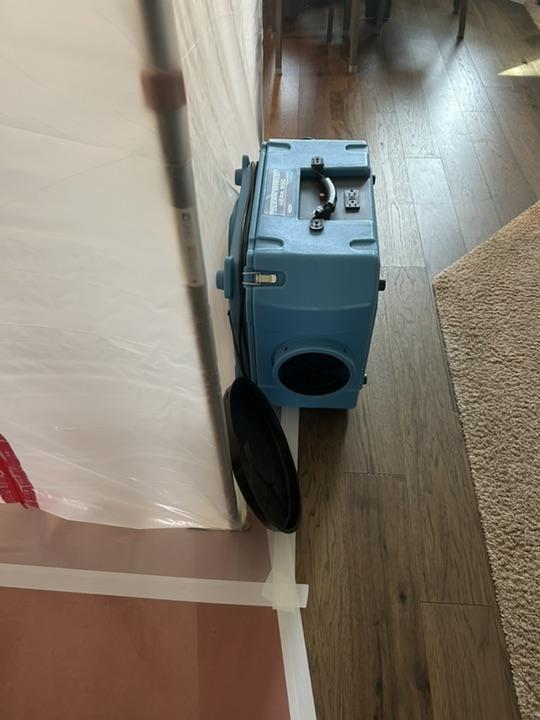
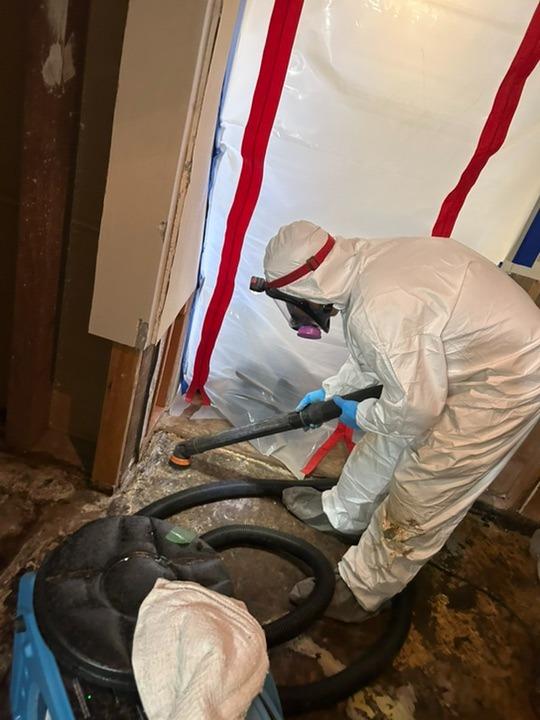
**Mold Remediation Requirements:** If mold has developed as a result of the water damage, remediation adds a significant expense to the project. Mold remediation involves containment barriers, HEPA filtration, material removal, antimicrobial treatment, and clearance testing—each of which adds cost but is essential for safe, complete restoration.
Cost Per Square Foot for Water Damage in Denver
Understanding per-square-foot pricing provides a useful benchmark for evaluating restoration quotes and estimating your total project cost.
**Basic extraction, drying, and sanitization** for clean or grey water events typically runs $3.33 to $3.84 per square foot. This covers water removal, equipment placement, daily monitoring, and standard antimicrobial treatment.
**Carpet removal and replacement** averages $10 to $11 per square foot including both removal of damaged carpet and padding and installation of replacement materials. Costs can be higher for specialty carpeting or areas requiring subfloor repair before new carpet can be installed.
**Structural drying and dehumidification** for more severe damage runs $8 to $12 per square foot. This rate applies when building materials require extended drying periods with commercial-grade equipment, which is common in Class 3 and Class 4 damage situations.
**Drywall replacement** typically costs $2 to $4 per square foot for removal, disposal, new installation, taping, mudding, texturing, and priming. Finish painting is usually an additional expense.
**Hardwood floor restoration** varies widely from $3 to $8 per square foot for sanding and refinishing to $8 to $15 per square foot for full replacement, depending on the wood species and installation complexity.
Average Water Mitigation Costs for Denver Homeowners
Water mitigation—the immediate steps taken to prevent further damage after a water event—represents a distinct cost from full restoration. Effective mitigation involves emergency response, water extraction, initial drying setup, and monitoring to stabilize the situation and prevent secondary damage like mold growth.
For Denver homes under 2,500 square feet, water mitigation costs typically average $2,500 to $3,750. This covers the emergency response, industrial extraction equipment, initial dehumidifier and air mover placement, and the first several days of monitoring. Larger homes or more severe water events will push mitigation costs higher.
Effective mitigation requires swift response, ideally beginning within six hours of the water event, to minimize secondary damage. The investment in prompt mitigation almost always saves money compared to the expanded restoration scope that results from delayed response. Water that sits for 48 hours or more typically results in mold growth, which can add $2,000 to $6,000 or more to the total project cost.
Managing Expenses and Choosing the Right Service
Smart cost management starts well before you experience water damage. Here are strategies that Denver homeowners should employ:
**Obtain multiple itemized quotes** from reputable restoration companies. Request line-by-line breakdowns of labor, equipment, and material costs so you can make meaningful comparisons. Be wary of unusually low quotes that may indicate corners will be cut, and equally wary of inflated quotes that do not correspond to the actual scope of damage.
**Understand your insurance coverage** before you need it. Review your policy annually with your agent, understanding exactly what water damage events are covered, what your deductible is, and whether you have endorsements for sewer backup, sump pump failure, or flood coverage. When filing a claim, thorough documentation including photographs, videos, and written descriptions strengthens your position significantly.
**Implement preventive measures** to reduce your risk of water damage. Regular plumbing inspections, water leak detection systems, sump pump maintenance, and proper drainage management cost a fraction of what emergency restoration requires. For Denver homeowners, winterizing pipes, maintaining gutters, and ensuring proper grading around your foundation are especially important preventive steps.
**Act quickly when damage occurs.** The single most effective way to control restoration costs is to respond immediately. Call a professional restoration company within hours, not days, of discovering water damage. Begin basic mitigation—stopping the water source, moving belongings from the affected area, and promoting air circulation—while waiting for professional help to arrive.
**Leverage your restoration company's insurance expertise.** Many professional restoration companies work directly with insurance carriers regularly and can help navigate the claims process. Their documentation and experience with insurance requirements can expedite approvals and ensure you receive the coverage you are entitled to.
Understanding the Value of Professional Restoration
While cost is an important consideration, the cheapest option is rarely the best value in water damage restoration. Inadequate restoration that leaves hidden moisture behind walls or under floors will eventually result in mold growth, structural deterioration, and a much larger repair bill. Professional restoration companies invest in industrial equipment, certified training, and systematic processes because these tools and methods produce thorough results that prevent costly secondary damage.
When evaluating the cost of professional restoration, consider the potential consequences of incomplete work: mold remediation can add thousands to your eventual costs, structural repairs from prolonged moisture damage are among the most expensive home repairs, and the health risks of living with hidden moisture and mold are impossible to put a price on.
NuBilt provides transparent, itemized pricing for all water damage restoration projects in the Denver region. Our team works with your insurance company to maximize your coverage and offers free initial assessments to help you understand the scope and expected cost of your specific situation. Contact us at (303) 368-4688 for a prompt evaluation and honest estimate.
Need Professional Help?
Our team is available 24/7 for emergencies. Call now for immediate assistance.
Frequently Asked Questions
Immediate action within 24 hours is crucial to minimize secondary damage like mold growth and structural warping, which significantly increase restoration costs. Ideally, professional mitigation should begin within 6 hours of the water event. Every day of delay can add substantially to the final restoration bill.
Most standard homeowner policies cover sudden, accidental water damage such as burst pipes and appliance failures. However, gradual leaks, flood damage from external sources, and maintenance-related issues typically require additional coverage or separate policies. Review your specific policy and discuss coverage gaps with your insurance agent before an emergency occurs.
Water mitigation focuses on urgent, immediate actions including water extraction, initial drying equipment setup, and monitoring to prevent further damage and mold growth. Full restoration encompasses everything that follows: structural repairs, material replacement, finish work like painting and flooring installation, and returning the property to its pre-loss condition.
Minor spills on non-porous surfaces can be addressed with household equipment, but professional intervention is essential for comprehensive drying and sanitization of any significant water event. Professional equipment detects hidden moisture that consumer tools cannot reach, and proper drying protocols prevent mold growth and structural damage that DIY efforts typically miss.
Water frequently migrates behind walls, into insulation, and beneath flooring where it cannot be seen or reached without professional equipment. Locating and treating these hidden wet zones requires specialized thermal imaging and targeted drying equipment, which typically adds 10 to 20 percent to basic cleanup costs. However, addressing hidden moisture is essential to prevent far more expensive mold and structural problems later.